Laman

Twitter Delicious Facebook Digg Stumbleupon Favorites More

Tampilkan postingan dengan label Pernikahan Islam. Tampilkan semua postingan

Senin, 08 November 2010

Muslim Wedding (In Iran):


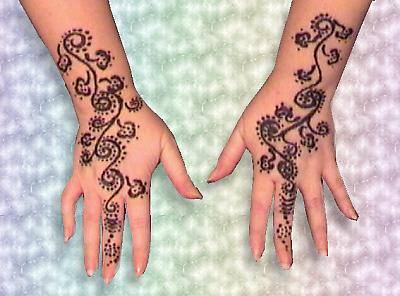
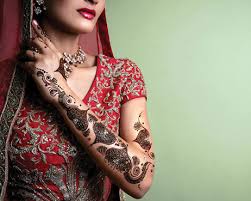
On the eve of the wedding , the bride's hands and feet are painted by her female relatives using hena dye . The ceremony can be conducted by any knowledgeable Muslim male, but an Imam usually leads it. Muslim men can marry Muslim or Christian, but the women can marry only Muslims.
The wedding beings at 9:00 in the evening and goes on until about 4:00 in the morning. The bride usually wears a whtie dress and the groom a long white robe. During the ceremony the men and women are in separate rooms and sit or dance or listening to musics. After the ceremony, the guests are given a meal and at some wedding, they receive a gift!!! It is so attractive, isn't it ???
you can see some more hena dying pictures below :
Chinese Muslim Wedding Traditions

Since China is a very diverse country and the Muslims of China are equally diverse there is no one way to describe the wedding tradition of Chinese Muslims. It is however safe to say that just like other Muslim communities they are a blend of local cultures and Islamic religious requirements just as Arab Muslim wedding traditions are a blend of Arab culture and Islamic requirements, Malaysian wedding traditions are a blend of Malaysian culture and Islamic requirements etc. Here is an excerpt regarding Chinese Muslim weddings from the Muslim Reverts website for people who may be interested in this subject.

Contacts between Muslims and Chinese began very early. Arab merchants traded in silk even before the advent of Islam, and tradition has it that the new religion was brought to their port-city trading colonies by Muslim missionaries in the seventh century.
In 755, a contingent of 4000 soldiers, mostly Muslim Turks, was sent by the Abbasid caliph Abu Jafar al-Mansur to help the Chinese emperor Su Tsung quell a revolt by one of his military commanders, An LuShan. Following the recapture of the imperial capital, Ch’angan (today’s Xian), these soldiers settled in China, married Chinese wives and founded inland Muslim colonies similar to those established by the traders on the coast.
A Chinese Muslim wedding is very complex, but it avoids all superstitions such as the reading of the horoscopes of the betrothed persons. Some ask the Ahund to read the Arabic wedding rite on the wedding day or the day before. If one of the parties is not a Muslim, the Ahund admits that one into Islam one or two days before the wedding so both may be of the same faith. Betrothal money was not taken seriously since it looked like a business transaction. Now it is customary to give clothing or jewelry, or a small amount of money is given and looked upon as only a symbol. Marriage is based on love. This change should be introduced to other Islamic countries as a means of solving the problem of the decrease in marriage due to the heavy betrothal price.
The old type of Chinese wedding ceremony is now out of date except among poor people in the country. According to the old custom the parents of the concerned parties monopolized the whole affair. The new type follows the teaching of Islam and gains the consent of both parties. Islamic wedding customs are rational and at the same time are timeless, for they follow rules laid down more than thirteen hundred years ago. Emphasis on agreement between both parties, especially the consent of the girl, shows the Islamic stress on the rights of men and the protection of the rights of womanhood.
The ceremonies of engagement and marriage are quite similar for Chinese Muslims and non-Muslims except that the Muslims celebrate the event with a religious and a general ceremony, and they do not use old Chinese music or gongs or fire crackers since they consider them to be superstitious. The religious ceremony is held a day before or just preceding the general ceremony. At present Muslims hold the marriage ceremony in the mosque. In modern times Western music has been adopted for marriages since it is not associated with the worship of other gods. Chinese Muslims obey the Civil Law of China by practicing monogamy almost everywhere except in the frontier provinces. There is no Muslim court to take care of divorce, adoption, and inheritance, as in other Muslim countries; all these matters are now handled in the general courts.

Taureg is sahara community in wedding


Tuareg Wedding Sahara Desert Africa
We have romanticized sexuality. Here are the words of a dissenting voice at the Catholic council when the schema on marriage was being proposed:

The schema is too Occidental . . . You in the West find it quite natural for those in love to marry. But you are the exceptions if humanity as a whole is considered. Our people love one another because they are married, which is not quite the same thing. We differ from Westerners in that our marriages are contracted not out of love but by the will of the parents or tribe. We marry to continue the race.

Arabian wedding ceremony

Marsabit District, Arabic Ariaal warriors compete and dance to impress men at a wedding.

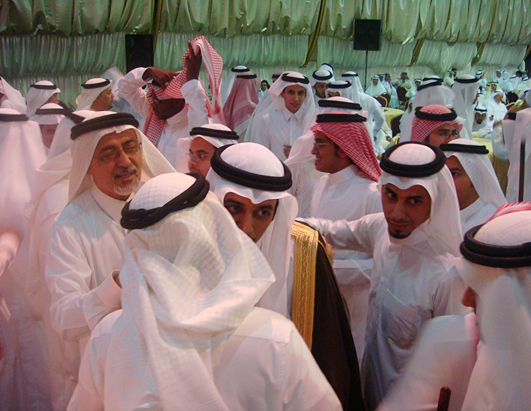
At this upper-middle class wedding in Jeddah, Saudi Arabia, men from both the bride's and the groom's family meet to celebrate. The groom greets the male members of the bride's family with kisses. According to Islamic law, men and women celebrate separately. And in keeping with Muslim tradition, the bride is traditionally not photographed, in keeping with Muslim tradition.

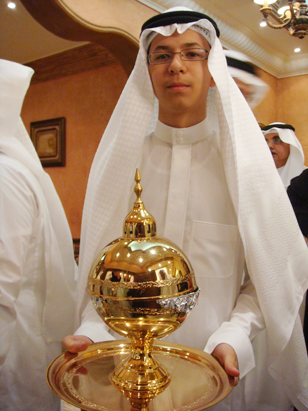
At this Saudi Arabian wedding, a young relative of the groom carries incense during the all male ceremony, which includes both the groom's and the bride's families.

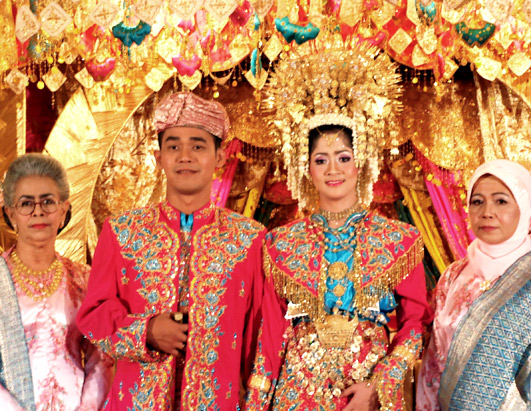
Wedding in minang indonesian


At this Indonesian wedding, the bride, thirty-year- old Vini Muslimov and groom, thirty-year- old Azwirman Sebastianputra, are formally presented with their mothers by their side. The stage, lit and lavishly decorated the color of gold, is shaped in the style of a traditional Padang House and is called Rumah Gadang, or big house.

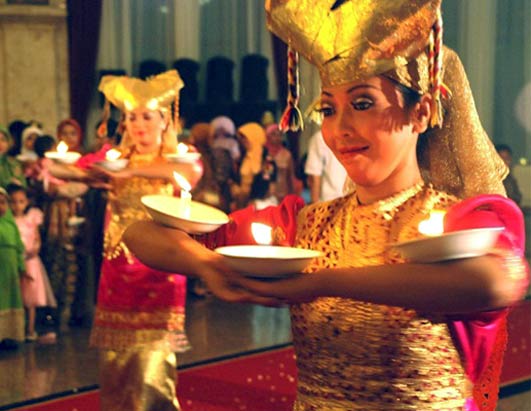
In Indonesia, women dancers balance flickering candles on saucer plates in their arms, as they glide through the room to the rhythm of the music. This "Tari Lilin," or candle dance, is a symbol of how the bride and groom can achieve their aspirations of married life together. __________________

wedding in pakistan


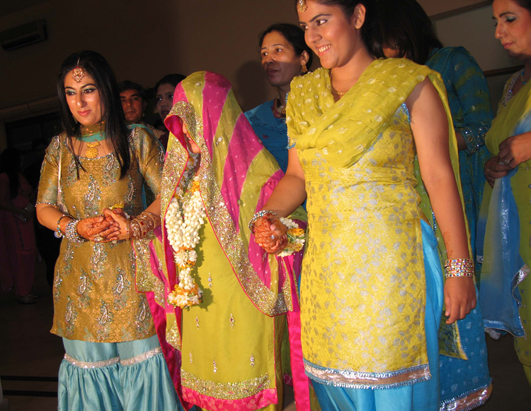
In Pakistan, the wedding ceremonies take place over three days. This bride and groom had an arraigned marriage. In one ritual, the bride is led by her family to officially unveil her face to the groom. The groom's family wears matching scarves at the ceremony and the women all wear gowns, like these, covered in jewels.


web site counter